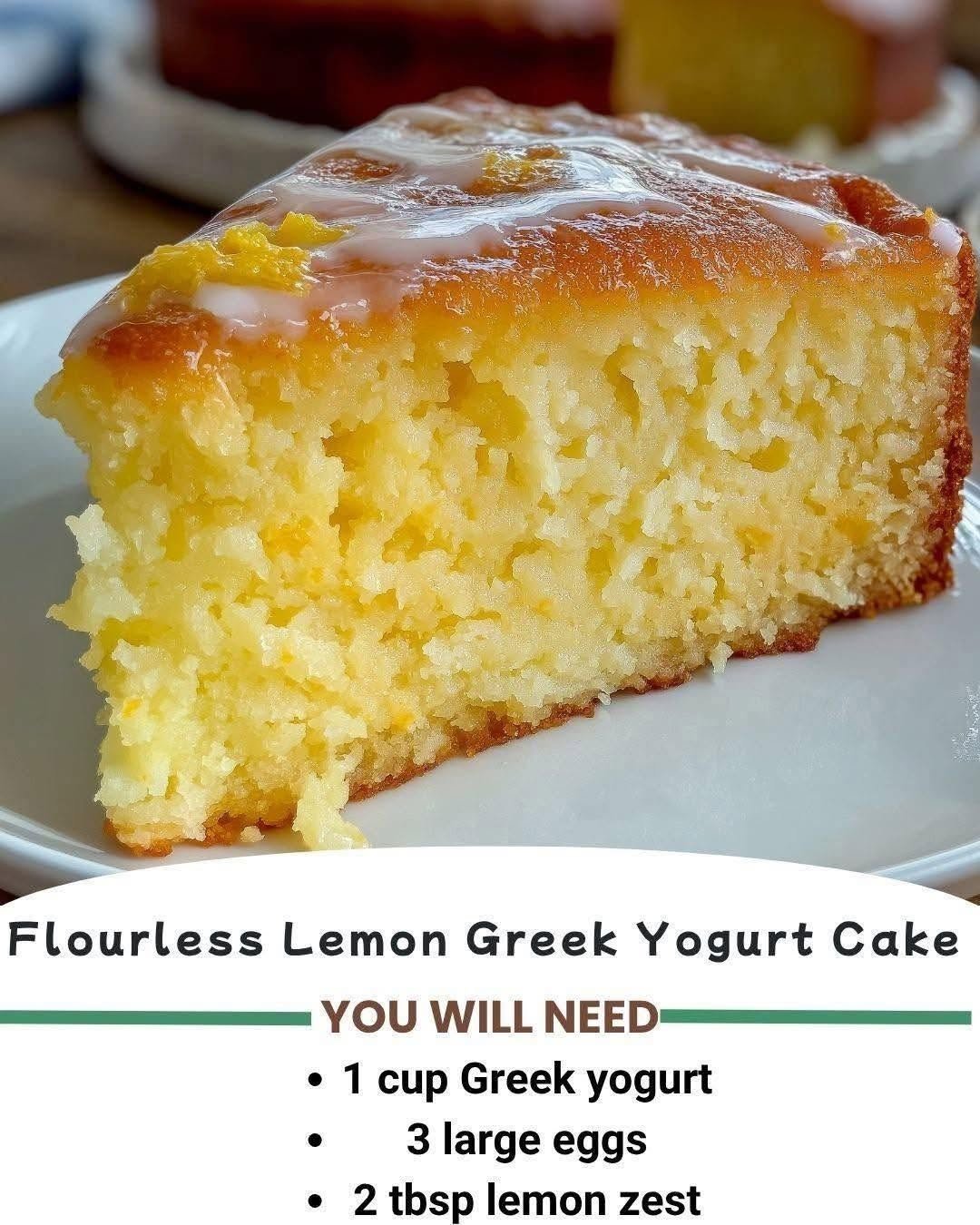
Flourless Lemon Greek Yogurt Cake
There are cakes that announce themselves with layers, frosting, and decorations—and then there are cakes like this flourless lemon Greek yogurt cake, which quietly wins everyone over with its soft, creamy texture and bright lemon flavor.
The moment it comes out of the oven, your kitchen fills with the fresh, sunny aroma of lemon. The edges turn lightly golden while the center stays wonderfully tender, almost cheesecake-like. Each bite is tangy, lightly sweet, creamy, and incredibly delicate.
And the best part? No flour is required.
Greek yogurt gives this simple lemon cake its luxurious texture, while fresh lemon zest and juice provide just enough brightness to keep it from feeling heavy. It’s an ideal dessert for spring and summer, afternoon tea, brunch, or whenever you’re craving something sweet but don’t want a complicated baking project.
Why You’ll Love This Flourless Lemon Cake
- Naturally flourless: No wheat flour is needed.
- Bright and refreshing: Fresh lemon gives every bite a beautiful citrus flavor.
- Creamy texture: Greek yogurt keeps the cake moist and tender.
- Easy to prepare: The batter comes together in one bowl.
- Simple ingredients: No unusual specialty ingredients are required.
- Lightly sweet: Perfect for people who don’t enjoy overly sweet desserts.
- Gluten-free: Naturally gluten-free when all packaged ingredients are certified gluten-free.
- Make-ahead friendly: The flavor and texture are especially lovely after chilling.
- Perfect for entertaining: Dust with powdered sugar and add fresh berries for an elegant presentation.
Ingredients
Makes 8 servings
For the Cake
- Full-fat Greek yogurt: 1½ cups / 360 g / 12.7 oz
- Granulated sugar: ¾ cup / 150 g / 5.3 oz
- Large eggs: 3 / approximately 150 g / 5.3 oz without shells
- Fresh lemon juice: ¼ cup / 60 ml / 2 fl oz
- Fresh lemon zest: 2 tablespoons / approximately 12 g / 0.4 oz
- Cornstarch: ¼ cup / 32 g / 1.1 oz
- Baking powder: 1 teaspoon / 4 g / 0.14 oz
- Vanilla extract: 1 teaspoon / 5 ml / 0.17 fl oz
- Salt: ¼ teaspoon / 1.5 g / 0.05 oz
For Finishing
- Powdered sugar, for dusting
- Fresh lemon zest
- Fresh berries, optional
- Greek yogurt or lightly whipped cream, optional
Ingredient Substitutions
Greek yogurt: Full-fat Greek yogurt gives the richest texture, but 2% Greek yogurt can also work.
Cornstarch: If you prefer another starch, potato starch can generally be substituted in a similar quantity.
Sugar: You can reduce the sugar slightly for a tarter cake, although reducing it too much can affect the texture.
Dairy-free: A thick, unsweetened dairy-free yogurt may work, but because different brands contain different amounts of liquid and fat, the final texture can vary.
Nutritional Information
Approximate nutrition per serving, assuming 8 servings and excluding powdered sugar and optional toppings:
- Calories: 190–210 kcal
- Protein: 7–8 g
- Carbohydrates: 27–30 g
- Fat: 6–7 g
- Fiber: less than 1 g
- Calcium: approximately 100–130 mg
Dietary Information
- Flourless: Yes
- Gluten-free: Yes, provided ingredients are certified gluten-free where necessary
- Vegetarian: Yes
- Keto: No, because of the sugar and cornstarch
- Vegan: No
- Nut-free: Yes
Nutrition is an estimate and varies by ingredient brands and portion size.
Kitchen Tools You’ll Need
Keep things simple:
- 8-inch / 20-cm round cake pan
- Parchment paper
- Large mixing bowl
- Whisk
- Measuring cups and spoons
- Fine grater or microplane for lemon zest
- Citrus juicer
- Rubber spatula
- Cooling rack
- Fine-mesh sieve for powdered sugar
A springform pan can also be used, particularly if you want to remove the chilled cake easily.
Step-by-Step Preparation
1. Prepare the Oven and Pan
Preheat your oven to 350°F / 175°C.
Grease an 8-inch round cake pan lightly with butter or cooking spray.
Line the bottom with parchment paper.
For an especially neat presentation, you can also line the sides with a strip of parchment.
2. Zest the Lemons
Before juicing your lemons, grate the zest.
This is important because zest contains the fragrant citrus oils that give the cake an intense lemon aroma.
Use only the yellow outer layer.
Avoid grating too deeply into the white pith, which can taste bitter.
For this recipe, you’ll need approximately 2 tablespoons of finely grated zest.
3. Whisk the Yogurt and Sugar
Add the Greek yogurt and sugar to a large mixing bowl.
Whisk until smooth and creamy.
You don’t need to whip the mixture heavily. Just make sure the sugar is evenly distributed and the yogurt has a smooth consistency.
4. Add the Eggs
Add the eggs one at a time, whisking gently after each addition.
The batter should become smooth and slightly glossy.
Don’t overbeat the eggs. Excessive whipping can introduce too much air, which may cause the cake to puff dramatically in the oven and then sink as it cools.
A little movement is good.
A full-on workout with the whisk isn’t necessary.
5. Add Lemon and Vanilla
Pour in the fresh lemon juice.
Add the lemon zest and vanilla extract.
Stir until everything is evenly combined.
At this stage, the kitchen should already smell wonderfully citrusy.
6. Add the Dry Ingredients
Add the cornstarch, baking powder, and salt.
Whisk gently until no visible pockets of dry ingredients remain.
The finished batter should be:
- Smooth
- Creamy
- Pourable
- Slightly thick
Don’t worry if it looks a little thinner than traditional cake batter. The Greek yogurt and eggs will help it set beautifully in the oven.
7. Pour Into the Pan
Pour the batter into your prepared cake pan.
Gently tap the pan against the counter once or twice to release any large air bubbles.
Smooth the surface with a spatula if necessary.
8. Bake
Place the cake in the center of the preheated oven.
Bake for approximately 35–45 minutes.
The exact time depends on your oven and the moisture content of the yogurt.
Look for these visual cues:
- The edges should be lightly golden.
- The top should look set.
- The center should have a very slight jiggle.
- A toothpick inserted near the center should come out mostly clean, with a few moist crumbs.
Don’t wait until the center is completely firm.
The cake will continue to set as it cools.
9. Cool Completely
Remove the cake from the oven and place it on a cooling rack.
Let it cool in the pan for approximately 20–30 minutes.
Then carefully remove it from the pan and allow it to cool completely.
For the best texture, refrigerate it for at least 1–2 hours before serving.
This gives the cake time to firm up and develop its creamy, almost cheesecake-like texture.
10. Finish and Serve
Just before serving, dust the top with powdered sugar.
Add a little fresh lemon zest for a beautiful finishing touch.
For a more elegant dessert, serve each slice with:
- Fresh strawberries
- Blueberries
- Raspberries
- A spoonful of Greek yogurt
- Lightly whipped cream
- A drizzle of honey
Then slice into that soft, lemony center.
Expert Tips for the Best Flourless Lemon Greek Yogurt Cake
Use Fresh Lemons
Bottled lemon juice simply doesn’t provide the same fresh aroma.
Since lemon is the star flavor, fresh lemons make a noticeable difference.
Don’t Overbake
This is probably the biggest mistake you can make.
The center should have a slight jiggle when the cake comes out of the oven. If you bake until it’s completely firm, the finished cake may lose some of its creamy tenderness.
Use Thick Greek Yogurt
The thicker the yogurt, the better the structure and texture.
If your Greek yogurt contains a lot of liquid, the cake may require slightly longer baking.
Don’t Skip the Zest
Lemon juice provides acidity and tang, but much of the intense lemon aroma comes from the zest.
For a seriously lemony cake, zest your lemons generously.
Let It Chill
Fresh from the oven, the cake is soft and delicate.
After chilling, it becomes firmer, creamier, and easier to slice.
In fact, many people prefer it the next day.
Common Mistakes to Avoid
Using Too Much Lemon Juice
It might be tempting to add extra juice for more lemon flavor, but too much liquid can interfere with the cake’s structure.
For more lemon intensity, add extra zest rather than dramatically increasing the juice.
Overmixing
Once the cornstarch and baking powder are incorporated, stop mixing.
Overworking the batter can affect the final texture.
Cutting It While Hot
The cake needs time to set.
If you slice it immediately after baking, it may seem too soft or even fall apart.
Give it time to cool.
Using a Large Pan
An 8-inch pan produces a relatively thick, tender cake.
A much larger pan will create a thinner cake that cooks faster and may become dry.
Delicious Variations
Blueberry Lemon Yogurt Cake
Fold ½ cup / 75 g / 2.6 oz fresh blueberries into the batter.
You can also scatter a few blueberries over the top before baking.
The combination of juicy berries and tangy lemon is spectacular.
Extra-Lemony Version
For serious citrus lovers:
- Add an additional 1 tablespoon lemon zest.
- Add a little extra zest over the finished cake.
- Serve with a spoonful of lemon-infused Greek yogurt.
Honey Lemon Cake
Replace part of the granulated sugar with honey.
For example, use ½ cup sugar plus ¼ cup honey.
Because honey adds additional moisture, the texture may be slightly softer.
Raspberry Lemon Cake
Fold fresh or frozen raspberries gently into the batter.
Don’t overmix after adding them or the berries can break apart and turn the batter pink.
Vanilla Lemon Cake
Increase the vanilla extract to 1½ teaspoons for a softer, more rounded flavor.
The vanilla works beautifully with the tangy Greek yogurt.
Storage & Reheating
Refrigerator
Store the cooled cake in an airtight container or tightly covered in the refrigerator.
It will keep for approximately 4–5 days.
In fact, the texture often becomes even better after the first day.
Freezer
You can freeze individual slices for approximately 1–2 months.
Wrap each slice tightly in plastic wrap or freezer-safe material, then place the pieces in a freezer-safe container.
Thaw overnight in the refrigerator.
Reheating
This cake is best served cold or at room temperature, so reheating usually isn’t necessary.
If you prefer it slightly warm, microwave a slice for approximately 10 seconds. Don’t overheat it, as the yogurt-based texture can become rubbery.
Serving Suggestions
This cake is lovely enough to serve on its own, but a few simple additions can make it spectacular.
For Breakfast or Brunch
Serve with:
- Greek yogurt
- Fresh berries
- Honey
- Coffee
- Tea
For Dessert
Add:
- Whipped cream
- Fresh raspberries
- Lemon zest
- Powdered sugar
- A small scoop of vanilla ice cream
For an Elegant Dinner Party
Place a slice on a plate, add a spoonful of lightly sweetened Greek yogurt, scatter a few berries around it, and finish with finely grated lemon zest.
Simple.
Fresh.
Beautiful.
Frequently Asked Questions
1. Why is my flourless lemon cake so moist?
That’s normal for this style of cake.
Greek yogurt contains significant moisture, and without flour, the cake naturally has a softer, creamier texture. Chilling it helps the structure firm up.
2. Can I use regular yogurt instead of Greek yogurt?
Greek yogurt is strongly recommended because it is thicker and contains less liquid. Regular yogurt may make the batter too wet and could result in a softer cake.
3. Does flourless mean gluten-free?
This recipe contains no wheat flour, so it is naturally flourless and generally gluten-free. However, if you’re preparing it for someone with celiac disease or a serious gluten intolerance, verify that all packaged ingredients are certified gluten-free and that your equipment is not contaminated.
4. Why did my cake sink in the middle?
A small amount of sinking is completely normal.
This cake is naturally moist and delicate. A dramatic collapse, however, can result from underbaking, excessive whipping of the eggs, or opening the oven too early.
5. Can I make this cake ahead of time?
Absolutely.
It’s actually an excellent make-ahead dessert. Prepare it the day before and refrigerate overnight. The chilled cake develops a wonderfully creamy texture and slices beautifully.
6. Can I make this recipe without cornstarch?
The cornstarch helps provide structure in the absence of flour. You can experiment with another starch, such as potato starch, but simply removing it without replacement will change the texture considerably.
7. Can I reduce the sugar?
Yes, but do so moderately.
Reducing the sugar too much can affect both sweetness and texture. If you want a more tart dessert, start by reducing the sugar by 2–3 tablespoons rather than eliminating a large portion.
Final Thoughts
This flourless lemon Greek yogurt cake is proof that a great cake doesn’t need a long ingredient list—or even flour.
It’s soft without being heavy, creamy without being overly rich, and bright with fresh lemon from the first bite to the last. The Greek yogurt gives it an irresistible tenderness, while the lemon zest provides that beautiful burst of citrus fragrance that makes you reach for another slice.
Serve it chilled on a warm afternoon, bring it to brunch, or dress it up with berries and whipped cream for dessert.
And when someone asks, “How did you make such a delicious cake without flour?” just smile.