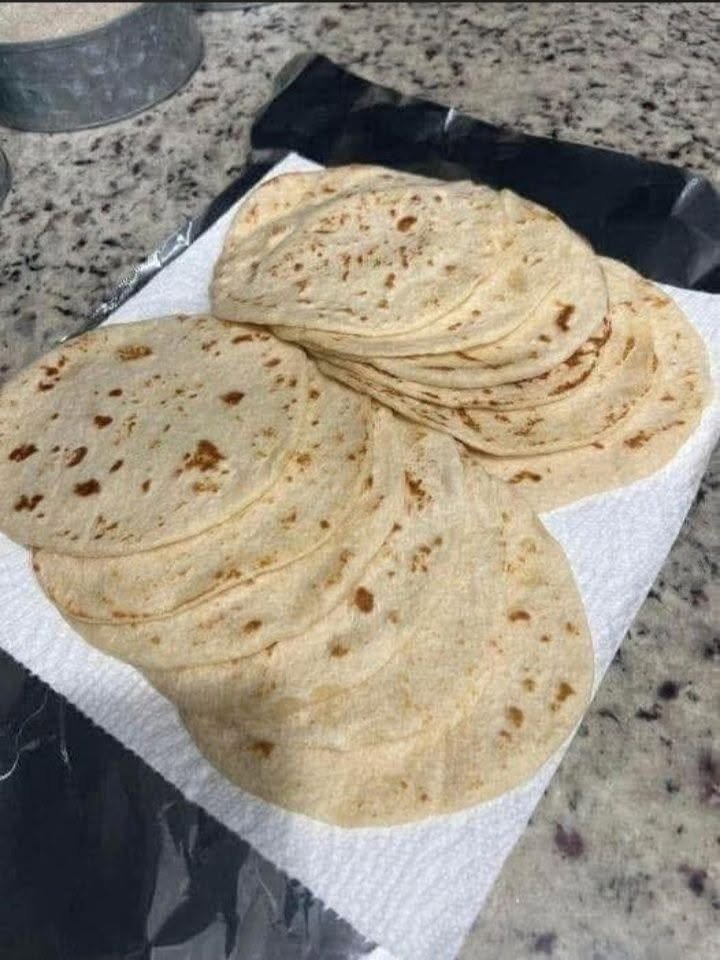
Homemade Flour Tortillas: Soft, Warm & Perfectly Fluffy Every Time
There’s something almost magical about a warm flour tortilla straight from the skillet. The moment it hits the hot pan, it puffs slightly, releasing that irresistible toasted-wheat aroma. Stack a few in a clean kitchen towel, and suddenly dinner feels less like a meal and more like a little celebration.
Tear off a tortilla while it’s still warm and you’ll get that perfect combination of soft, chewy, tender, and lightly golden. Fill it with sizzling chicken, scrambled eggs, beans, roasted vegetables, or simply a swipe of butter, and you’ll understand why homemade flour tortillas are worth making from scratch.
The best part? You don’t need a tortilla press, special equipment, or complicated ingredients. With flour, water, fat, salt, and a little patience, you can make a batch of delicious homemade tortillas right in your kitchen.
Why You’ll Love This Recipe
- Easy to make: Just a handful of everyday ingredients.
- Budget-friendly: Homemade tortillas cost considerably less than many packaged options.
- Soft and flexible: Perfect for wraps, tacos, quesadillas, burritos, and breakfast.
- No yeast required: There’s no long rising process.
- Freezer-friendly: Make a big batch and save some for later.
- Customizable: Use whole-wheat flour, olive oil, herbs, or spices.
- Family-friendly: Mild, soft, and easy for kids to enjoy.
- Better flavor: Freshly cooked tortillas have a wonderful aroma and tenderness that packaged tortillas simply can’t match.
Ingredients for Homemade Flour Tortillas
This recipe makes approximately 10 medium flour tortillas.
| Ingredient | Measurement |
|---|---|
| All-purpose flour | 2½ cups / 315 g / 11.1 oz |
| Warm water | ¾ cup + 2 tablespoons / 195 ml / 6.6 fl oz |
| Unsalted butter or vegetable shortening | 3 tablespoons / 42 g / 1.5 oz |
| Salt | 1 teaspoon / 5 g |
| Baking powder | ½ teaspoon / 2 g |
| Extra flour | 2–3 tablespoons, for rolling |
Healthy Substitutions
For a slightly more wholesome tortilla, replace ½ cup (60 g) of all-purpose flour with whole-wheat flour.
You can also use:
- Olive oil instead of butter for a dairy-free option.
- Whole-wheat flour for additional fiber.
- Plant-based butter for a vegan version.
- A combination of whole-wheat and all-purpose flour for tortillas that remain soft without becoming too dense.
Important: Traditional flour tortillas are made with wheat flour, so they are not gluten-free. For gluten-free tortillas, you’ll need a flour blend specifically formulated for tortillas.
Nutritional Information
Approximate nutrition per tortilla, assuming 10 tortillas:
- Calories: 145–155
- Protein: 3–4 g
- Carbohydrates: 22–24 g
- Fat: 4–5 g
- Fiber: About 1 g
- Sodium: Approximately 230–250 mg
These figures vary depending on the type of flour and fat used.
Dietary Information
- Vegetarian: Yes
- Vegan: Yes, when made with plant-based butter or vegetable oil
- Gluten-free: No
- Dairy-free: Yes, when made with oil or dairy-free butter
- Keto: No, because traditional flour tortillas are relatively high in carbohydrates
Kitchen Tools You’ll Need
Fortunately, this recipe requires very little equipment.
- Large mixing bowl
- Measuring cups and spoons
- Kitchen scale, optional but recommended
- Wooden spoon or spatula
- Clean work surface
- Rolling pin
- Cast-iron skillet, griddle, or heavy frying pan
- Clean kitchen towel or tortilla warmer
- Small bowl for extra flour
A cast-iron skillet is particularly useful because it retains heat beautifully and gives the tortillas consistent cooking.
Step-by-Step: How to Make Flour Tortillas
1. Combine the Dry Ingredients
Add the flour, salt, and baking powder to a large mixing bowl.
Whisk or stir everything together until evenly distributed.
Pro tip: Weighing your flour is the easiest way to get consistent tortillas. Too much flour is one of the main reasons homemade tortillas turn out stiff.
2. Work in the Butter
Add the softened butter or shortening.
Using your fingertips, rub the fat into the flour until the mixture resembles fine crumbs.
You shouldn’t see large pieces of butter remaining.
This step helps coat some of the flour particles with fat, contributing to that wonderfully tender texture.
3. Add the Warm Water
Slowly pour in the warm water while stirring.
The dough will initially look shaggy and slightly sticky.
Don’t worry.
Once the ingredients begin coming together, use your hands to gently knead the dough inside the bowl.
What temperature should the water be?
Aim for warm, not boiling water—roughly 100–110°F (38–43°C).
Warm water helps the dough come together easily and encourages a softer final texture.
4. Knead Until Smooth
Transfer the dough to a lightly floured surface.
Knead for approximately 3–5 minutes.
You’re looking for dough that feels:
- Soft
- Smooth
- Supple
- Slightly tacky but not wet
- Easy to stretch
If it’s extremely sticky, sprinkle in flour one teaspoon at a time.
If it feels dry or cracks when kneaded, add a teaspoon of warm water and continue working it.
Don’t over-knead!
You don’t need to develop a strong bread-like gluten structure. Overworking the dough can make tortillas tougher and harder to roll.
5. Rest the Dough
Shape the dough into a ball and place it back in the bowl.
Cover it with a clean kitchen towel or plastic wrap.
Let it rest for 20–30 minutes.
This is an important step—not one to skip.
Resting gives the gluten time to relax, making the dough dramatically easier to roll.
If you’ve ever rolled dough only to watch it spring right back, the dough probably needed more resting time.
6. Divide Into Portions
After resting, divide the dough into 10 equal pieces.
For consistency, each piece should weigh approximately 55 g (1.9 oz).
Roll each piece gently between your palms to form a smooth ball.
Cover the dough balls while you work so they don’t dry out.
7. Roll the Tortillas
Lightly flour your work surface.
Place one dough ball on the surface and flatten it gently with your palm.
Roll from the center outward, rotating the dough frequently.
Aim for a tortilla approximately 7–8 inches (18–20 cm) across.
Don’t worry if your tortillas aren’t perfectly round. Homemade tortillas are allowed to have personality!
Your texture target
The dough should be thin enough that you can almost see your hand through it, but not so thin that it tears when lifted.
8. Heat the Skillet
Place a dry cast-iron skillet or heavy frying pan over medium-high heat.
Allow it to preheat for approximately 3–5 minutes.
You don’t need oil.
A properly heated dry skillet is all you need.
9. Cook the Tortillas
Carefully place one tortilla onto the hot skillet.
Cook for approximately 30–45 seconds.
You should see small bubbles beginning to form.
Flip it.
Cook the second side for another 30–45 seconds, until you see light golden-brown spots.
Flip once more for approximately 10–15 seconds if necessary.
Don’t overcook them.
This is one of the biggest secrets to soft tortillas.
If you leave them on the skillet too long, moisture evaporates and the tortillas become dry and brittle.
10. Keep Them Warm and Soft
Immediately transfer each cooked tortilla to a clean kitchen towel or tortilla warmer.
Cover the stack.
The trapped steam helps keep the tortillas soft and pliable.
Continue cooking the remaining tortillas and stack them together.
By the time you’re finished, you’ll have a beautiful pile of warm, fragrant tortillas ready for dinner.
Expert Tips & Common Mistakes to Avoid
1. Using too much flour
This is probably the most common mistake.
Extra flour can make tortillas dry and tough.
Fix: Keep your work surface lightly floured and use only enough flour to prevent sticking.
2. Skipping the resting period
Freshly mixed dough can be elastic and difficult to roll.
Fix: Give the dough at least 20 minutes to relax.
3. Making the tortillas too thick
Thick tortillas can become doughy in the center.
Fix: Roll them thin and evenly.
4. Cooking over low heat
A cool skillet can dry out the tortillas before they develop those characteristic golden spots.
Fix: Use medium-high heat and make sure the pan is thoroughly preheated.
5. Overcooking
Brown doesn’t necessarily mean better.
Fix: Look for scattered golden-brown spots and bubbles, then flip.
6. Not covering cooked tortillas
Leaving them exposed allows moisture to escape.
Fix: Stack and cover them immediately after cooking.
7. Adding too much water
A very wet dough can be difficult to handle.
Fix: Add water gradually. Flour absorbs water differently depending on humidity and brand.
Delicious Variations & Customizations
🌶️ Spicy Flour Tortillas
Add ½ teaspoon chili powder and ¼ teaspoon cayenne pepper to the dry ingredients.
For an extra smoky flavor, try a pinch of smoked paprika.
These are fantastic with grilled chicken, steak, or spicy beans.
🌾 Healthier Whole-Wheat Tortillas
Replace up to half of the all-purpose flour with whole-wheat flour.
Because whole-wheat flour absorbs more liquid, you may need an additional tablespoon or two of warm water.
For the softest result, don’t replace all the flour unless you’re prepared for a slightly heartier tortilla.
🧀 Cheesy Tortillas
Add a small amount of finely grated cheese to the dough or sprinkle cheese onto the tortilla while reheating it.
Fold it over and let it melt.
Instant homemade quesadilla.
👧 Kid-Friendly Tortillas
Keep the dough simple and mild.
You can also cut cooked tortillas into triangles and toast them lightly for homemade chips.
Serve with mashed avocado, mild salsa, hummus, or cheese.
Storage & Reheating Instructions
Refrigerator
Allow the tortillas to cool completely.
Place them in an airtight container or resealable bag.
They will generally stay good for 3–4 days in the refrigerator.
Freezer
Separate tortillas with parchment paper and place them in a freezer-safe bag.
Freeze for up to 2–3 months for best quality.
The parchment makes it easy to remove individual tortillas without thawing the entire stack.
Best Reheating Method
For the best texture, heat a skillet over medium heat.
Place the tortilla on the dry skillet for approximately 15–20 seconds per side.
You can also microwave a stack wrapped in a slightly damp paper towel for 20–30 seconds, but the skillet method gives you better texture and flavor.
What to Serve With Homemade Flour Tortillas
Once you have a warm stack of tortillas, the possibilities are practically endless.
For breakfast
- Scrambled eggs
- Breakfast potatoes
- Sausage or beans
- Avocado
- Cheese
- Salsa
For lunch
- Grilled chicken wraps
- Turkey and cheese
- Tuna salad
- Roasted vegetables
- Hummus and salad
For dinner
- Chicken fajitas
- Beef tacos
- Carnitas
- Black beans
- Grilled vegetables
- Quesadillas
- Burritos
And honestly? Don’t underestimate the simplest serving suggestion: a hot tortilla spread with butter.
That first warm bite is pure comfort.
Frequently Asked Questions
Can I make flour tortillas without baking powder?
Absolutely. Baking powder isn’t essential. It can contribute a little extra tenderness and puff, but tortillas can be made successfully with flour, water, fat, and salt alone.
Why are my flour tortillas tough?
The usual culprits are too much flour, over-kneading, insufficient resting, or overcooking.
Start by measuring your flour carefully and cook the tortillas only until light golden-brown spots appear.
Why won’t my tortillas puff?
A very hot skillet, properly rested dough, and evenly rolled tortillas all help.
If your tortillas are too thick or the skillet isn’t hot enough, they may not puff well.
Don’t worry, though—the tortillas can still taste delicious.
Can I use olive oil instead of butter?
Yes. Replace the butter with approximately 3 tablespoons (45 ml) olive oil.
The tortillas will have a slightly different flavor but remain soft and delicious.
Can I make these tortillas ahead of time?
Yes. They’re excellent for meal prep.
Cook them, cool them completely, stack them, and refrigerate or freeze.
When you’re ready to eat, reheat them briefly in a hot skillet.
How do I keep flour tortillas soft?
The secret is moisture management.
Don’t add excessive flour, don’t overcook them, and immediately stack the finished tortillas under a clean towel.
Can I make this recipe gluten-free?
Not by simply swapping flour one-for-one with any gluten-free flour.
Use a gluten-free flour blend specifically designed for tortillas, preferably one containing a suitable binder such as xanthan gum, and follow the blend manufacturer’s recommended liquid ratios.
Final Thoughts: Your Next Batch of Tortillas Starts Here
There are recipes that fill your stomach, and then there are recipes that make your kitchen feel like home.
Homemade flour tortillas belong firmly in the second category.
They’re warm and tender, lightly toasted, wonderfully flexible, and surprisingly simple to make. Once you get comfortable with the dough, you’ll start finding excuses to make them—taco night, breakfast, lunch wraps, quesadillas, or simply because you want something warm and comforting straight from the skillet.
So grab your flour, warm up that pan, and give homemade tortillas a try.
Make a batch, fill them with your favorite flavors, and let me know how they turned out in the comments. And if this recipe becomes a new family favorite, share it with someone who needs a little homemade comfort in their kitchen!