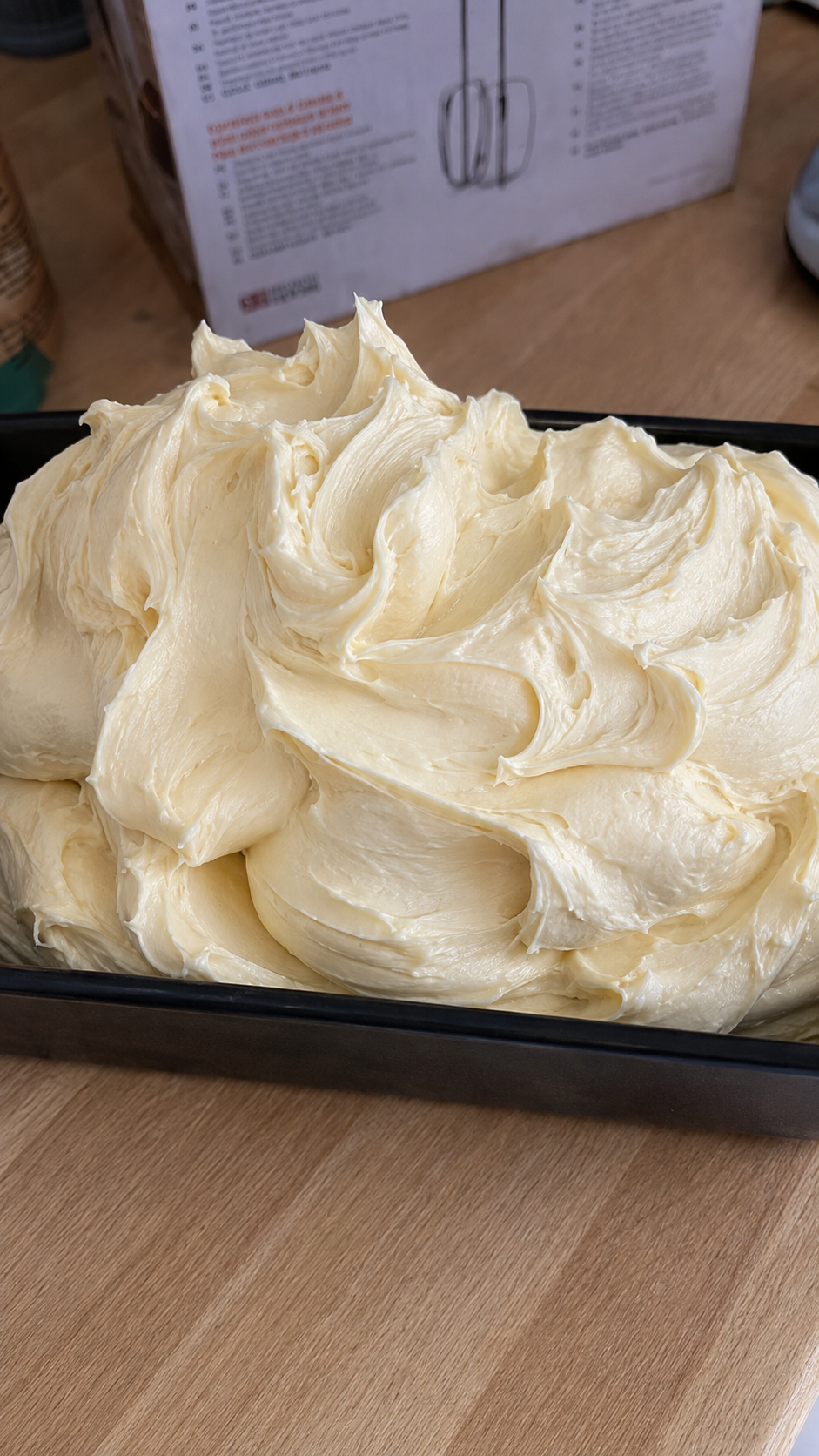
Creamy Homemade Buttercream Frosting
There’s something irresistible about a freshly frosted cake.
The cake may be soft and buttery, but that first swipe of creamy frosting is what makes everyone reach for a fork. Imagine sinking into a cloud of smooth vanilla buttercream—rich butter, sweet powdered sugar, a splash of vanilla, and just enough cream to make every bite silky and luxurious.
And the best part? You can make this creamy homemade buttercream frosting in your own kitchen in about 10 minutes.
No complicated techniques. No special ingredients. Just a few pantry staples and a mixer.
This easy buttercream is fluffy enough for piping cupcakes, smooth enough for spreading over layer cakes, and delicious enough that you may find yourself eating a spoonful straight from the bowl.
Why You’ll Love This Homemade Buttercream
- Quick and easy: Ready in about 10 minutes.
- Only a few ingredients: Most are probably already in your pantry.
- Creamy and fluffy: Perfect for cakes and cupcakes.
- Easy to customize: Add chocolate, citrus, caramel, or other flavors.
- Perfect for decorating: Holds its shape beautifully when piped correctly.
- Make-ahead friendly: Prepare it several days in advance.
- Freezer-friendly: Freeze extra frosting for another baking project.
- Beginner-friendly: No complicated pastry skills required.
- Perfect for celebrations: Birthdays, weddings, holidays, and everyday baking.
- Better than store-bought: Fresh butter and real vanilla make an enormous difference.
Ingredients for Creamy Buttercream Frosting
This recipe makes approximately 3 cups / 720 g of frosting, enough to generously frost about 24 cupcakes or fill and frost a two-layer 8-inch / 20-cm cake.
Ingredients
- 226 g unsalted butter — 1 cup / 8 oz, softened
- 480 g powdered sugar — approximately 4 cups / 16.9 oz, sifted
- 60 ml heavy cream or whole milk — ¼ cup / 2 fl oz
- 2 teaspoons pure vanilla extract — 10 ml / ⅓ fl oz
- ¼ teaspoon fine salt — approximately 1.5 g
Optional
For an especially luxurious buttercream, add:
- 1 tablespoon heavy cream — 15 ml / ½ fl oz
- ½ teaspoon vanilla bean paste
- A tiny amount of food coloring, if desired
Choosing the Right Ingredients
Butter
Use good-quality unsalted butter for the best flavor.
Unsalted butter gives you control over the salt level and allows the sweet vanilla flavor to shine.
Make sure the butter is soft but not melted.
When you press your finger into it, the butter should yield easily while still holding its shape.
Powdered Sugar
Sift the powdered sugar before adding it.
This helps eliminate lumps and creates noticeably smoother frosting.
If your powdered sugar is particularly lumpy, sift it twice.
Heavy Cream vs. Milk
Heavy cream creates a richer, silkier buttercream.
Whole milk produces a slightly lighter frosting.
Both work well.
Nutritional Information
Approximate nutrition per 2-tablespoon serving, depending on the exact ingredients:
- Calories: approximately 140
- Protein: less than 1 g
- Carbohydrates: approximately 16–18 g
- Fat: approximately 8–9 g
- Fiber: 0 g
This buttercream is:
- Vegetarian: Yes
- Gluten-free: Yes, provided all ingredients are appropriately labeled
- Egg-free: Yes
- Vegan: No in the standard recipe, but plant-based butter and non-dairy milk can be substituted
- Dairy-free: No in the standard recipe
Kitchen Tools You’ll Need
You don’t need professional pastry equipment.
Gather:
- Stand mixer or electric hand mixer
- Large mixing bowl
- Rubber spatula
- Measuring cups and spoons
- Kitchen scale, preferably
- Fine-mesh sieve
- Piping bag and decorating tips, optional
A stand mixer makes large batches especially easy, but a hand mixer works perfectly well.
How to Make Creamy Homemade Buttercream
Step 1: Bring the Butter to the Right Temperature
Remove the butter from the refrigerator approximately 30–60 minutes before making the frosting.
The exact time depends on your kitchen temperature.
You want the butter soft enough to whip easily but not so warm that it looks greasy or melted.
The perfect test
Press a fingertip into the butter.
It should leave a clear indentation without collapsing the entire piece.
Step 2: Beat the Butter
Place the softened butter into a large mixing bowl.
Using a stand mixer fitted with the paddle attachment or an electric hand mixer, beat the butter on medium-high speed for 3–5 minutes.
The butter should become:
- Pale
- Light
- Smooth
- Fluffy
Don’t rush this stage.
Whipping the butter properly is one of the biggest secrets to creamy homemade frosting.
Step 3: Add the Powdered Sugar Gradually
Reduce the mixer speed to low.
Add the sifted powdered sugar approximately ½ cup at a time, mixing after each addition.
This prevents a giant cloud of sugar from covering your kitchen.
Once all the sugar has been incorporated, scrape down the sides and bottom of the bowl.
Step 4: Add Vanilla and Salt
Add:
- 2 teaspoons vanilla extract
- ¼ teaspoon salt
Mix on low speed until incorporated.
The tiny amount of salt is important.
It doesn’t make the frosting salty—it balances the sweetness and makes the butter and vanilla taste more pronounced.
Step 5: Add the Cream
Pour in ¼ cup / 60 ml of heavy cream or milk.
Beat on low speed initially to prevent splashing.
Then increase to medium-high speed and whip for another 2–3 minutes.
Watch the texture transform.
The frosting should become noticeably lighter, smoother, and fluffier.
Step 6: Adjust the Consistency
Now check your frosting.
If it feels too thick, add more cream 1 teaspoon at a time.
If it’s too thin, add additional sifted powdered sugar 1 tablespoon at a time.
Don’t make dramatic adjustments.
Small changes can transform the consistency quickly.
Step 7: Whip for the Final Finish
Once the consistency is right, beat the buttercream for another 1–2 minutes.
This final whipping step creates that beautifully airy texture that makes homemade buttercream so irresistible.
Scrape down the bowl once more.
Give it a final stir with a spatula to remove large air pockets if you’re planning to pipe it.
How to Tell When Buttercream Is Perfect
Your finished frosting should be:
- Smooth
- Creamy
- Fluffy
- Spreadable
- Able to hold a soft peak
- Easy to pipe
- Rich without feeling greasy
Run a spatula through the bowl.
The frosting should hold the groove for a moment while remaining soft enough to spread.
Expert Tips for Perfect Buttercream
Use Softened Butter, Not Melted Butter
This is crucial.
Melted butter can produce greasy, loose frosting that refuses to hold its shape.
If you’ve accidentally melted the butter, chill it until it becomes soft and opaque again.
Whip the Butter First
Don’t simply dump everything into the bowl at once.
Whipping the butter before adding the sugar incorporates air and gives the frosting its signature light texture.
Sift Your Sugar
Even if the powdered sugar looks smooth, sifting helps prevent tiny lumps.
It also makes piping much easier.
Don’t Add Too Much Liquid
It’s tempting to pour in extra cream when the frosting looks stiff.
Don’t.
Add liquid gradually.
A tablespoon too much can turn beautifully pipeable buttercream into a soft, loose mixture.
Taste Before Decorating
Always taste the finished frosting.
Need more vanilla?
Add a little.
Too sweet?
A tiny pinch of salt can help balance it.
Too thick?
Add a teaspoon of cream.
The recipe is a starting point, not a rigid rule.
Common Buttercream Problems and How to Fix Them
My Buttercream Is Too Runny
The butter may have been too warm, or too much cream was added.
Fix:
Place the bowl in the refrigerator for 10–15 minutes, then whip again.
If necessary, gradually add powdered sugar.
My Buttercream Is Too Thick
Add heavy cream or milk 1 teaspoon at a time, mixing thoroughly after each addition.
Stop as soon as the frosting reaches the consistency you want.
My Frosting Looks Grainy
The powdered sugar may not have been incorporated thoroughly.
Beat the frosting for another 2–3 minutes.
If necessary, add a teaspoon of cream and continue mixing.
My Buttercream Looks Curdled
This can happen when the ingredients are at different temperatures.
Keep mixing.
If the buttercream remains curdled, gently warm the outside of the mixing bowl for a few seconds, then whip again.
Avoid overheating it.
My Buttercream Is Too Sweet
American buttercream is naturally sweet because it uses powdered sugar.
Add a small pinch of salt and a little extra vanilla.
For a less-sweet frosting overall, consider making a Swiss, Italian, or French buttercream instead.
Delicious Buttercream Variations
Chocolate Buttercream
Replace approximately 50 g / ½ cup of the powdered sugar with 40 g / ½ cup unsweetened cocoa powder.
Add an extra tablespoon or two of cream as needed.
The result is rich, chocolatey, and perfect for birthday cakes.
Strawberry Buttercream
Add 2–3 tablespoons freeze-dried strawberry powder.
Mix thoroughly and adjust the consistency with a small amount of cream if needed.
The natural berry flavor pairs beautifully with vanilla cake.
Lemon Buttercream
Add:
- 1 tablespoon fresh lemon juice
- 1–2 teaspoons finely grated lemon zest
Reduce the cream slightly if necessary.
This bright version is fantastic with vanilla, coconut, or berry cakes.
Salted Caramel Buttercream
Beat 2–3 tablespoons thick caramel sauce into the finished buttercream.
Add a small pinch of flaky sea salt.
This version is especially good on chocolate cupcakes.
Coffee Buttercream
Dissolve 1–2 teaspoons instant espresso powder in a teaspoon of warm cream.
Cool slightly, then beat it into the frosting.
Perfect for mocha cupcakes and chocolate cakes.
Dairy-Free Buttercream
Replace the butter with a high-quality plant-based butter suitable for baking.
Use unsweetened non-dairy milk instead of heavy cream.
Because plant-based butter brands vary, you may need to adjust the powdered sugar slightly.
How to Color Buttercream
Food coloring works best when added gradually.
Start with a tiny amount and mix thoroughly.
For vibrant colors, gel food coloring is generally easier to control than liquid coloring because it adds less moisture.
Pro tip:
Make the frosting slightly darker than your desired shade.
The color can intensify as the frosting rests.
How to Pipe Buttercream
Transfer the frosting into a piping bag fitted with your preferred decorating tip.
For classic cupcakes, try:
- 1M tip: beautiful swirls
- 2D tip: ruffled, dramatic rosettes
- Round tip: simple dots and borders
- Petal tip: flowers and decorative designs
Hold the piping bag vertically and apply steady pressure.
Practice on a plate before decorating the actual cake if you’re new to piping.
Storage Instructions
Room Temperature
If the frosting hasn’t been used on a perishable cake or filling, it can generally sit covered at room temperature for several hours.
Keep it away from direct sunlight and heat.
Refrigerator
Store buttercream in an airtight container for approximately 5–7 days.
Before using, let it soften at room temperature.
Then whip it again for a few minutes to restore its fluffy texture.
Freezer
Buttercream freezes very well.
Place it in an airtight freezer-safe container and freeze for up to 3 months for best quality.
Thaw overnight in the refrigerator, then allow it to soften at room temperature and whip thoroughly before decorating.
Best Cakes to Pair With Buttercream
This frosting is incredibly versatile.
Try it with:
- Vanilla cake
- Chocolate cake
- Red velvet cake
- Carrot cake
- Funfetti cake
- Strawberry cake
- Lemon cake
- Banana cake
- Brownies
- Sugar cookies
- Cupcakes
- Cake pops
For a classic birthday cake, pair vanilla cake with vanilla buttercream and colorful sprinkles.
For something more indulgent, use chocolate cake with chocolate buttercream and a thin layer of salted caramel.
Frequently Asked Questions
How far ahead can I make buttercream?
You can make it several days ahead and store it in the refrigerator.
Before using it, allow it to soften and whip it again until smooth and fluffy.
Why does my buttercream taste too sweet?
American buttercream contains a substantial amount of powdered sugar.
A pinch of salt, extra vanilla, or a little citrus zest can help balance the sweetness.
Can I use salted butter?
Yes.
If using salted butter, reduce or omit the additional salt until you’ve tasted the finished frosting.
Can I make buttercream without a stand mixer?
Absolutely.
An electric hand mixer works very well.
You can technically make buttercream by hand, but achieving the same fluffy texture requires considerably more effort.
Can I use milk instead of heavy cream?
Yes.
Whole milk works well.
Heavy cream creates a richer and slightly silkier frosting.
How do I make buttercream less sweet?
The easiest solution is to use a less-sweet style of buttercream, such as Swiss meringue buttercream.
If you’re sticking with American buttercream, increase the butter slightly and balance the flavor with salt and vanilla, while adjusting the powdered sugar carefully to maintain structure.
Why does my buttercream melt on the cake?
The frosting can soften when exposed to a warm room or warm cake.
Always allow the cake to cool completely before frosting it.
If your kitchen is hot, refrigerate the decorated cake until the buttercream firms up.
Final Thoughts
A great buttercream isn’t just frosting.
It’s the finishing touch that turns a simple homemade cake into something worth celebrating.
With its creamy texture, rich buttery flavor, and sweet vanilla aroma, this easy homemade buttercream frosting is the kind of recipe you’ll come back to again and again.
Once you learn the basic method—soft butter, plenty of whipping, sifted sugar, and gradual additions—you can transform it into practically any flavor you dream up.
Chocolate.
Strawberry.
Lemon.
Coffee.
Salted caramel.
Or simply classic vanilla.
Soften that butter, grab your mixer, and get ready to make a bowl of frosting that tastes infinitely better than anything from a tub.