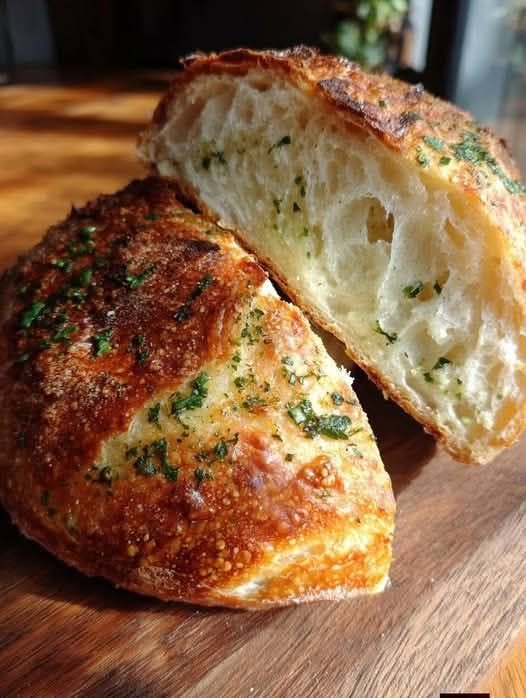
Homemade Garlic Herb Bread: Buttery, Crispy & Irresistibly Fragrant
Few things can make a kitchen feel more welcoming than the aroma of freshly baked garlic herb bread.
Imagine pulling a golden loaf from the oven while melted butter bubbles around the edges. The crust is crisp and lightly toasted, the center is soft and fluffy, and every warm bite is infused with fragrant garlic, parsley, and Italian herbs.
Then there’s that moment when you tear off a piece while it’s still warm.
The garlic butter melts across your fingertips. The herbs perfume the air. The bread practically begs you to dip it into soup, pasta sauce, or whatever happens to be on the dinner table.
This homemade garlic herb bread recipe is simple, comforting, and incredibly versatile. Serve it alongside pasta, soup, roasted chicken, salads, or enjoy a slice straight from the oven.
Why You’ll Love This Garlic Herb Bread
- 🧄 Packed with real garlic flavor
- 🌿 Fresh herbs add incredible aroma and freshness
- 🧈 Golden, buttery, and crisp on the outside
- 🍞 Soft and fluffy inside
- ⏱️ Straightforward ingredients and easy preparation
- 🍝 Perfect alongside pasta, soup, and casseroles
- 🥖 Wonderful for dipping into sauces
- ❄️ Freezer-friendly
- 👨👩👧 A family favorite for weeknight dinners and gatherings
Ingredients With Exact Measurements
This recipe makes 1 large loaf, approximately 10–12 servings.
For the Bread
- 3 cups (375 g / 13.2 oz) all-purpose flour
- 2¼ teaspoons (7 g / 0.25 oz) instant yeast
- 1 tablespoon (13 g / 0.5 oz) granulated sugar
- 1 teaspoon (6 g / 0.2 oz) salt
- 1 cup (240 ml / 8 fl oz) warm water
- 2 tablespoons (30 ml) olive oil
- 1 tablespoon (14 g / 0.5 oz) melted butter
For the Garlic Herb Butter
- ½ cup (113 g / 4 oz) unsalted butter, softened
- 5–6 cloves garlic, finely minced — approximately 18 g (0.6 oz)
- 2 tablespoons (8 g / 0.3 oz) fresh parsley, finely chopped
- 1 tablespoon (3 g / 0.1 oz) fresh basil, chopped
- 1 teaspoon (1 g / 0.04 oz) dried oregano
- ½ teaspoon (1 g / 0.04 oz) dried thyme
- ¼ teaspoon (1.5 g / 0.05 oz) salt
- ¼ teaspoon black pepper
Optional Cheese Topping
- ¼ cup (25 g / 0.9 oz) grated Parmesan
- ½ cup (50 g / 1.8 oz) shredded mozzarella
Healthy Substitutions
For a slightly lighter version:
- Replace some of the butter with extra-virgin olive oil.
- Use whole-wheat flour for up to ½ of the flour.
- Reduce the amount of cheese.
- Add extra fresh herbs for flavor without additional fat.
For a dairy-free version, use a plant-based butter alternative.
Nutritional Information Per Serving
Approximate values based on 10 servings and including the garlic herb butter:
- Calories: approximately 260 kcal
- Protein: 5 g
- Carbohydrates: 33 g
- Fat: 12 g
- Fiber: approximately 2 g
Values will vary depending on the exact amount of butter and toppings used.
Dietary Information
This bread is:
- Vegetarian
- Egg-free
- Easily made dairy-free
- Not gluten-free unless gluten-free flour is used
Kitchen Tools You’ll Need
- Large mixing bowl
- Measuring cups and spoons
- Wooden spoon or dough whisk
- Clean work surface
- Baking sheet
- Parchment paper
- Pastry brush
- Sharp knife
- Small bowl
- Cooling rack
A stand mixer fitted with a dough hook is optional but can make kneading easier.
Step-by-Step Preparation
1. Activate the Yeast
Pour the warm water into a large mixing bowl.
The water should feel comfortably warm, approximately 100–110°F (38–43°C).
Add the sugar and yeast.
Stir gently and let the mixture sit for 5–10 minutes.
If using instant yeast, it may not become dramatically foamy, but you should notice that it has dissolved and the mixture looks slightly creamy.
Pro tip: Water that is too hot can damage the yeast. Warm—not hot—is what you’re looking for.
2. Make the Dough
Add the flour and salt to the bowl.
Pour in the olive oil and melted butter.
Stir until a shaggy dough forms.
The dough should feel soft and slightly tacky but shouldn’t be excessively sticky.
If it feels very wet, add flour 1 tablespoon (8–10 g) at a time.
If it’s too dry, add warm water 1 teaspoon at a time.
3. Knead the Dough
Turn the dough onto a lightly floured surface.
Knead for approximately 7–10 minutes.
Push the dough away from you with the heel of your hand, fold it back, rotate, and repeat.
You’re looking for dough that becomes:
- Smooth
- Elastic
- Soft
- Slightly springy
You can also use a stand mixer on low-medium speed for approximately 5–7 minutes.
4. Let the Dough Rise
Place the dough in a lightly oiled bowl.
Cover it with a clean kitchen towel or plastic wrap.
Set it somewhere warm and allow it to rise for approximately 60–90 minutes, or until it has roughly doubled in size.
The exact time depends on your room temperature.
A warm kitchen speeds up fermentation, while a cool kitchen may require more time.
5. Prepare the Garlic Herb Butter
While the dough rises, make the garlic butter.
Combine the softened butter, minced garlic, parsley, basil, oregano, thyme, salt, and pepper in a small bowl.
Mix thoroughly.
The butter should be soft enough to spread easily.
For an even deeper garlic flavor, let the mixture sit at room temperature for 15–20 minutes.
6. Shape the Bread
Once the dough has doubled, gently punch it down to release excess air.
Turn it onto a lightly floured surface.
Shape it into a long loaf approximately 12–14 inches (30–35 cm) long.
Place it on a parchment-lined baking sheet.
Alternatively, shape it into a round boule.
7. Add the Garlic Butter
Using a sharp knife, make several shallow diagonal cuts across the top of the loaf.
Don’t cut all the way through.
Generously spread the garlic herb butter across the surface, working some into the cuts.
This allows the butter and garlic to melt down into the bread as it bakes.
For an extra indulgent loaf, sprinkle Parmesan over the top.
8. Give It a Second Rise
Cover the shaped loaf loosely.
Allow it to rest for approximately 25–35 minutes.
It should look slightly puffier.
This short second rise helps create a lighter interior.
9. Bake Until Golden
Preheat the oven to 375°F (190°C).
Bake the loaf for approximately 25–30 minutes.
The bread should be:
- Deep golden brown on top
- Crisp around the edges
- Fragrant with garlic and herbs
- Cooked through in the center
If you’re using a thermometer, the center should reach approximately 190–200°F (88–93°C).
If the top browns too quickly, loosely cover it with foil during the final 10 minutes.
10. Finish and Rest
Remove the bread from the oven.
Brush the top with any remaining garlic herb butter.
Sprinkle with fresh parsley and Parmesan if desired.
Allow the loaf to rest for approximately 10 minutes before slicing.
This gives the interior time to finish setting while keeping the bread warm and tender.
Then tear off a piece.
The crisp crust gives way to a soft, buttery center filled with garlic and herbs.
That’s the moment you know homemade bread was worth it.
Expert Tips for Perfect Garlic Herb Bread
Don’t Rush the Rise
Bread needs time.
If your dough hasn’t doubled after an hour, don’t force it into the oven. Give it more time.
Yeast works according to temperature, not a stopwatch.
Don’t Add Too Much Flour
A slightly tacky dough often produces softer bread.
Adding excessive flour can make the loaf dense and dry.
Use Fresh Garlic
Freshly minced garlic provides a much stronger and more aromatic flavor than garlic powder.
Don’t Burn the Garlic
Garlic can become bitter when severely overbrowned.
If your loaf is browning rapidly, cover it loosely with foil.
Let the Butter Soften
Cold butter is difficult to spread and can tear the dough.
Softened butter distributes much more evenly.
Common Mistakes & How to Fix Them
My Bread Is Dense
The dough may not have risen enough, or you may have added too much flour.
Give the dough enough time to double before shaping.
My Dough Isn’t Rising
Check your yeast and water temperature.
If the yeast is old or the water was too hot, the yeast may not activate properly.
The Garlic Tastes Bitter
The garlic may have been overbrowned.
Lower the oven temperature slightly or cover the bread with foil during the final part of baking.
The Center Is Still Doughy
Bake for a few additional minutes.
You can also check the internal temperature with an instant-read thermometer.
The Crust Is Too Hard
Avoid overbaking, and allow the loaf to cool under a clean kitchen towel if you prefer a softer crust.
Variations & Customizations
🧀 Cheesy Garlic Herb Bread
Add ½ cup (50 g / 1.8 oz) shredded mozzarella and ¼ cup (25 g / 0.9 oz) Parmesan during the final 5 minutes of baking.
Bake until the cheese is bubbling and golden.
🌶️ Spicy Garlic Bread
Add:
- ½ teaspoon red pepper flakes
- ¼ teaspoon cayenne
- A pinch of smoked paprika
The heat works beautifully with the buttery garlic.
🫒 Garlic Herb Focaccia-Style Bread
Instead of shaping a loaf, press the dough into an oiled baking pan.
Make deep dimples with your fingertips and drizzle generously with olive oil.
Top with garlic, herbs, and flaky salt.
Bake until golden.
🧀 Cheddar Garlic Bread
Replace the Parmesan with shredded sharp cheddar.
Add chopped green onions for extra flavor.
🌿 Extra-Herb Version
Use a mixture of:
- Parsley
- Basil
- Rosemary
- Thyme
- Chives
Fresh herbs give the bread a wonderfully fragrant, garden-fresh character.
Storage & Reheating Instructions
Room Temperature
Store the cooled bread in an airtight container or bread bag for approximately 2 days.
Avoid refrigerating bread unless necessary because refrigeration can make it stale more quickly.
Refrigerator
If you’ve added ingredients that require refrigeration, such as certain fresh cheese toppings, refrigerate leftovers and consume them within 3–4 days.
Freezer
Wrap the cooled loaf tightly in plastic wrap and place it inside a freezer-safe bag.
Freeze for up to 2–3 months.
For easier serving, you can freeze individual slices.
Best Reheating Method
Place slices in a 350°F (175°C) oven for approximately 5–8 minutes.
For a whole loaf, wrap loosely in foil and warm for approximately 10–15 minutes.
Add a little fresh garlic butter before reheating if the bread needs extra moisture.
Serving Suggestions
Garlic herb bread belongs next to almost everything.
Serve it with:
- Spaghetti and meatballs
- Creamy pasta
- Lasagna
- Tomato soup
- Vegetable soup
- Chicken soup
- Grilled chicken
- Roasted vegetables
- Baked pasta
- Salads
- Stews
- Chili
And don’t forget dipping sauces.
A small bowl of warm marinara or extra garlic butter turns each piece into an irresistible appetizer.
Frequently Asked Questions
1. Can I use dried herbs instead of fresh?
Absolutely. Dried oregano and thyme work particularly well. As a general rule, use about one-third as much dried herb as you would fresh.
2. Can I make this bread without yeast?
Yes, but it will have a different texture. Yeast creates the characteristic fluffy, chewy bread structure.
For a quick version, you could use a baking-powder-based dough, but it will be more like a biscuit than traditional bread.
3. Can I prepare the dough the night before?
Yes. After kneading, cover the dough and refrigerate it overnight.
Allow it to come closer to room temperature before shaping and baking.
4. Why is my garlic bread soggy?
Too much butter or insufficient baking can cause a soggy center.
Spread the garlic butter generously but evenly, and make sure the loaf is fully baked before removing it.
5. Can I use garlic powder?
Yes. For a milder flavor, replace the fresh garlic with approximately 1½ teaspoons (5 g) garlic powder.
Fresh garlic will provide a more vibrant flavor.
6. Can I make this recipe dairy-free?
Yes. Replace the butter with a plant-based butter alternative and omit the Parmesan or use a dairy-free cheese.
7. Can I make individual garlic herb rolls?
Definitely.
Divide the dough into 10–12 portions, shape them into balls, arrange them in a greased baking dish, and allow them to rise before brushing generously with garlic herb butter.
Bake at 375°F (190°C) for approximately 18–23 minutes.
Final Thoughts
There’s something deeply comforting about homemade bread.
Maybe it’s the quiet rhythm of kneading the dough. Maybe it’s watching it slowly rise. Or perhaps it’s that unforgettable moment when the oven door opens and warm garlic, butter, and herbs fill the entire kitchen.
This homemade garlic herb bread brings all of those little pleasures together in one golden loaf.
Serve it with your favorite pasta, dunk it into a steaming bowl of soup, or simply tear off a warm piece and enjoy it straight from the oven.
Make a loaf tonight, fill your kitchen with that irresistible garlic-and-herb aroma, and prepare yourself for everyone asking, “Can we have another piece?”