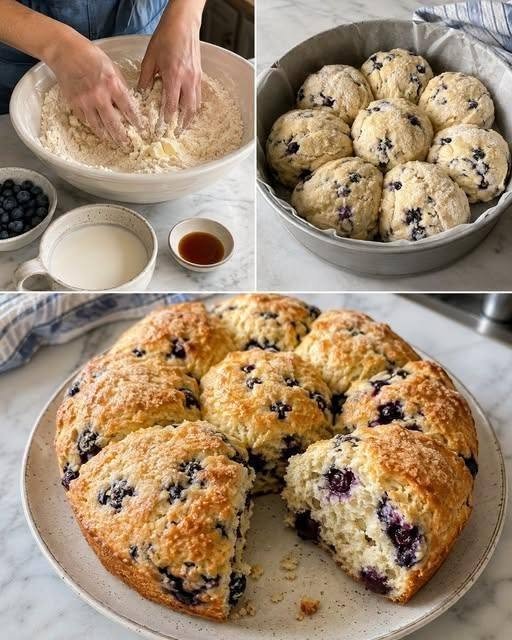
Homemade Bakery-Style Blueberry Scones
Few things can make an ordinary morning feel special quite like a warm, freshly baked blueberry scone. Imagine breaking one open while it’s still slightly warm: crisp, golden edges give way to a tender, buttery center, juicy blueberries peek through every layer, and a delicate vanilla glaze melts into the craggy top.
These homemade bakery-style blueberry scones are designed to give you that irresistible coffee-shop experience right in your own kitchen. They’re buttery without being greasy, sweet without being overwhelming, and wonderfully tender inside with beautifully crisp edges.
And don’t worry if you’ve never made scones before. With a few simple techniques—and one very important rule about keeping your butter cold—you can make a batch that looks and tastes like it came straight from a professional bakery.
Why You’ll Love This Blueberry Scone Recipe
- 🫐 Loaded with blueberries in every bite.
- 🧈 Buttery and tender inside with crisp golden edges.
- ☕ Bakery-style appearance without complicated techniques.
- ⏱️ Ready in about 35 minutes.
- ❄️ Freezer-friendly, so you can bake them whenever you crave one.
- 🍋 A touch of lemon brings out the natural sweetness of the blueberries.
- 🍯 A simple vanilla glaze gives them a beautiful finishing touch.
- 👩🍳 Perfect for breakfast, brunch, afternoon tea, or weekend baking.
Ingredients With Exact Measurements
This recipe makes approximately 8 large scones.
For the Scones
- 2 cups (250 g / 8.8 oz) all-purpose flour
- ⅓ cup (67 g / 2.4 oz) granulated sugar
- 2 teaspoons (8 g / 0.28 oz) baking powder
- ½ teaspoon (3 g / 0.1 oz) fine salt
- ½ cup (113 g / 4 oz) unsalted butter, very cold
- 1 cup (150 g / 5.3 oz) fresh blueberries
- ¾ cup (180 ml / 6 fl oz) heavy cream, cold
- 1 large egg, cold
- 1 teaspoon (5 ml) vanilla extract
- 1 teaspoon finely grated lemon zest
For Brushing
- 1 tablespoon (15 ml) heavy cream
- 1 tablespoon (13 g / 0.5 oz) coarse sugar, optional
Simple Vanilla Glaze
- 1 cup (120 g / 4.2 oz) powdered sugar
- 1½ tablespoons (22 ml) milk or heavy cream
- ½ teaspoon (2.5 ml) vanilla extract
- Tiny pinch of salt
Healthy Substitutions
Want to make a slightly lighter batch?
- Replace up to ½ cup (60 g) of the all-purpose flour with whole-wheat flour.
- Use Greek yogurt in place of part of the heavy cream.
- Reduce the sugar slightly if you’re using very sweet blueberries.
- Skip the glaze for a less-sweet breakfast option.
- Use fresh lemon zest for bright flavor without adding much sugar.
For the most authentic bakery-style texture, however, I recommend making the recipe as written at least once.
Nutritional Information Per Scone
Approximate values, including glaze:
- Calories: 380 kcal
- Protein: 6 g
- Carbohydrates: 50 g
- Fat: 18 g
- Fiber: 2 g
- Sugar: approximately 20 g
Blueberries provide antioxidants, vitamin C, and vitamin K.
Dietary Information
These scones are:
- Vegetarian
- Egg-containing
- Dairy-containing
- Not gluten-free
For gluten-free scones, use a 1:1 gluten-free baking flour blend designed to replace wheat flour.
Kitchen Tools You’ll Need
- Large mixing bowl
- Small bowl
- Pastry cutter or fork
- Measuring cups and spoons
- Whisk
- Rubber spatula
- Baking sheet
- Parchment paper
- Pastry brush
- Cooling rack
- Fine grater or zester
A pastry cutter is helpful, but you can absolutely make these scones with your fingertips.
Step-by-Step Preparation
1. Chill Everything First
Before you begin, make sure the butter, cream, and egg are cold.
For especially flaky scones, cut the butter into small cubes and place it in the refrigerator while you prepare the dry ingredients.
Preheat your oven to 400°F (200°C).
Line a baking sheet with parchment paper.
2. Combine the Dry Ingredients
In a large bowl, whisk together:
- Flour
- Sugar
- Baking powder
- Salt
- Lemon zest
Whisk for about 20–30 seconds to distribute everything evenly.
The lemon zest might seem like a small detail, but it gives the finished scones a fresh citrus aroma that makes the blueberries taste even brighter.
3. Cut in the Cold Butter
Add the cold cubed butter.
Using a pastry cutter, fork, or your fingertips, work the butter into the flour until you have a mixture that resembles coarse crumbs.
But here’s the secret:
Don’t make every piece of butter disappear.
You want some pieces about the size of small peas still visible.
Those little pockets of butter melt during baking, creating flaky layers and tender pockets throughout the scone.
If your kitchen is warm and the butter starts feeling soft, put the bowl in the refrigerator for 10 minutes before continuing.
4. Add the Blueberries
Gently fold the blueberries into the flour-and-butter mixture.
Fresh blueberries are ideal, but frozen blueberries work too.
If using frozen blueberries, don’t thaw them first. Thawed berries release too much moisture and can turn the dough purple and sticky.
Handle the berries gently so they don’t burst.
5. Mix the Wet Ingredients
In a separate bowl, whisk together:
- Cold heavy cream
- Egg
- Vanilla extract
Whisk just until combined.
Don’t overwork the mixture.
6. Bring the Dough Together
Pour the wet ingredients into the dry mixture.
Using a rubber spatula, gently fold everything together.
The dough should look shaggy and slightly crumbly.
That’s exactly what you want.
Don’t knead it like bread dough.
Overworking scone dough develops gluten and can turn your beautifully tender scones tough.
If there are a few dry crumbs at the bottom of the bowl, use your hands to gently press everything together.
7. Shape the Dough
Lightly flour your work surface.
Turn the dough onto it and gently press it into a round approximately 1 inch (2.5 cm) thick.
Don’t worry about making it perfectly smooth.
Those rustic edges are part of the charm.
Using a sharp knife or bench scraper, cut the dough into 8 wedges.
Alternatively, form a round and use a biscuit cutter for round scones.
8. Chill the Shaped Scones
Arrange the scones on your parchment-lined baking sheet, leaving approximately 2 inches (5 cm) between them.
For especially flaky results, place the entire tray in the refrigerator for 15–20 minutes.
This allows the butter to firm up again before baking.
It’s a small extra step that can make a noticeable difference.
9. Brush With Cream
Brush the tops lightly with heavy cream.
Sprinkle with coarse sugar if desired.
The cream encourages beautiful browning, while the sugar creates a delicate crunchy crust.
10. Bake Until Golden
Bake at 400°F (200°C) for approximately 18–23 minutes.
The scones are ready when:
- The tops are golden.
- The edges feel set.
- The centers look cooked rather than wet.
- The bottoms are lightly browned.
Don’t be alarmed if some blueberry juice bubbles onto the parchment. That’s part of the deliciousness.
Transfer the scones to a cooling rack.
Allow them to cool for approximately 10–15 minutes before glazing.
How to Make the Vanilla Glaze
While the scones cool, whisk together the powdered sugar, milk or cream, vanilla, and a tiny pinch of salt.
The glaze should be thick enough to drizzle but thin enough to flow.
If it’s too thick, add milk ½ teaspoon at a time.
If it’s too thin, add a little more powdered sugar.
Drizzle the glaze over the cooled or slightly warm scones.
Then try—if you can resist—the first bite.
Expert Tips for Perfect Bakery-Style Scones
Keep the Butter Cold
This is probably the most important rule.
Cold butter creates steam as the scones bake, which helps produce flaky layers.
Soft butter simply blends into the dough.
Don’t Overmix
Once the dough comes together, stop mixing.
A few rough-looking areas are perfectly fine.
The more you work the dough, the tougher the scones can become.
Don’t Add Too Much Flour
A sticky or slightly shaggy dough is preferable to a dry dough.
Adding lots of extra flour makes the finished scones dense.
Use just enough flour to shape the dough.
Use a Sharp Knife
When cutting wedge-shaped scones, use a sharp knife and press straight down.
Don’t drag the knife through the dough, as this can compress the layers.
Chill Before Baking
Cold dough going into a hot oven gives you a better chance of getting tall, flaky scones.
Don’t Overbake
Blueberry scones should be golden on the outside but tender inside.
Once they’re nicely browned and set, take them out.
Common Scone Mistakes & How to Fix Them
My Scones Are Too Dry
You may have added too much flour or overbaked them.
Next time, keep the dough slightly moist and shaggy.
My Scones Didn’t Rise
Check your baking powder.
If it’s old or inactive, your scones won’t get the lift you’re looking for.
Also make sure you’re not pressing the dough too thin.
My Scones Spread Too Much
The butter may have become too warm.
Chill the shaped scones for 20–30 minutes before baking.
My Blueberries Turned the Dough Purple
This usually happens when blueberries are overmixed or frozen berries have been thawed.
Fold them in gently, and keep frozen berries frozen until they’re added to the dough.
Variations & Customizations
🍋 Lemon Blueberry Scones
For an even brighter citrus flavor, increase the lemon zest to 2 teaspoons.
You can also add a little lemon juice to the glaze instead of milk.
🥥 Blueberry Coconut Scones
Add ½ cup (40 g / 1.4 oz) shredded coconut to the dough.
The subtle coconut flavor pairs beautifully with blueberries.
🍫 Blueberry White Chocolate Scones
Fold in ½ cup (85 g / 3 oz) white chocolate chips along with the blueberries.
The creamy sweetness of white chocolate is delicious against the slightly tart berries.
🧁 Mini Blueberry Scones
Divide the dough into 12–16 smaller pieces instead of 8.
Bake for approximately 14–18 minutes, watching carefully toward the end.
They’re perfect for brunch buffets or afternoon tea.
🫐 Mixed Berry Scones
Replace some of the blueberries with raspberries, blackberries, or chopped strawberries.
Keep the total amount of fruit around 1 cup (150 g).
Storage & Reheating Instructions
Room Temperature
Store completely cooled scones in an airtight container for approximately 1–2 days.
They’re best on the day they’re baked.
Refrigerator
You can refrigerate them for approximately 3–4 days, although refrigeration can slightly dry out baked goods.
Freezer
Scones freeze beautifully.
Wrap individual scones tightly and place them in a freezer-safe container for up to 2–3 months.
For even better results, freeze the unbaked shaped dough.
Place the shaped scones on a tray and freeze until solid, then transfer them to a freezer bag.
Bake directly from frozen, adding approximately 3–5 minutes to the baking time.
Best Reheating Method
Warm baked scones in a 300°F (150°C) oven for approximately 5–8 minutes.
You can also microwave one for about 10–15 seconds, but the oven gives you a much better texture.
Serving Suggestions
These blueberry scones are practically begging to be served alongside a hot drink.
Try them with:
- Fresh coffee
- Earl Grey tea
- English breakfast tea
- Chai
- Hot chocolate
- Fresh fruit
- Greek yogurt
- Whipped cream
- Lemon curd
- Strawberry jam
- A little salted butter
For brunch, arrange them on a platter with fresh blueberries, sliced strawberries, lemon wedges, and small bowls of jam.
They’ll disappear quickly.
Frequently Asked Questions
1. Can I use frozen blueberries?
Yes! Frozen blueberries work wonderfully. Add them straight from the freezer without thawing.
2. Why do my scones come out hard?
The most common causes are overmixing, adding too much flour, or baking them too long.
Handle the dough gently and bake just until golden.
3. Can I make the dough ahead of time?
Absolutely. Shape the scones and refrigerate them overnight, covered.
Bake them directly from the refrigerator the next morning.
You can also freeze the unbaked scones for longer-term storage.
4. Can I use milk instead of heavy cream?
Yes, but heavy cream produces a richer and more tender scone.
If using milk, you may need slightly less liquid, so add it gradually until the dough comes together.
5. Should I use fresh or frozen blueberries?
Both work well.
Fresh berries are especially good during blueberry season, while frozen berries are convenient year-round and can actually hold their shape beautifully during baking.
6. Can I make these scones gluten-free?
Yes. Use a good-quality 1:1 gluten-free flour blend that contains a suitable binder such as xanthan gum.
The texture may be slightly different, but the recipe can still produce delicious results.
7. How do I get tall bakery-style scones?
Keep the butter cold, don’t overwork the dough, shape it relatively thick, and chill the shaped scones before baking.
A fully preheated oven is also essential.
Final Thoughts
There’s something special about homemade scones.
Maybe it’s the buttery aroma filling the kitchen. Maybe it’s the anticipation as those golden edges rise in the oven. Or maybe it’s simply sitting down with a warm scone, a cup of coffee, and realizing that an ordinary morning has suddenly become something worth slowing down for.
These homemade bakery-style blueberry scones give you all of that cozy bakery magic without requiring professional equipment or complicated pastry skills.
Keep your butter cold, handle the dough gently, don’t be afraid of a few crumbs—and let the oven do the rest.
Bake a batch this weekend, drizzle them with vanilla glaze, and enjoy them warm with your favorite cup of coffee or tea. And if you make them, share your favorite twist in the comments!